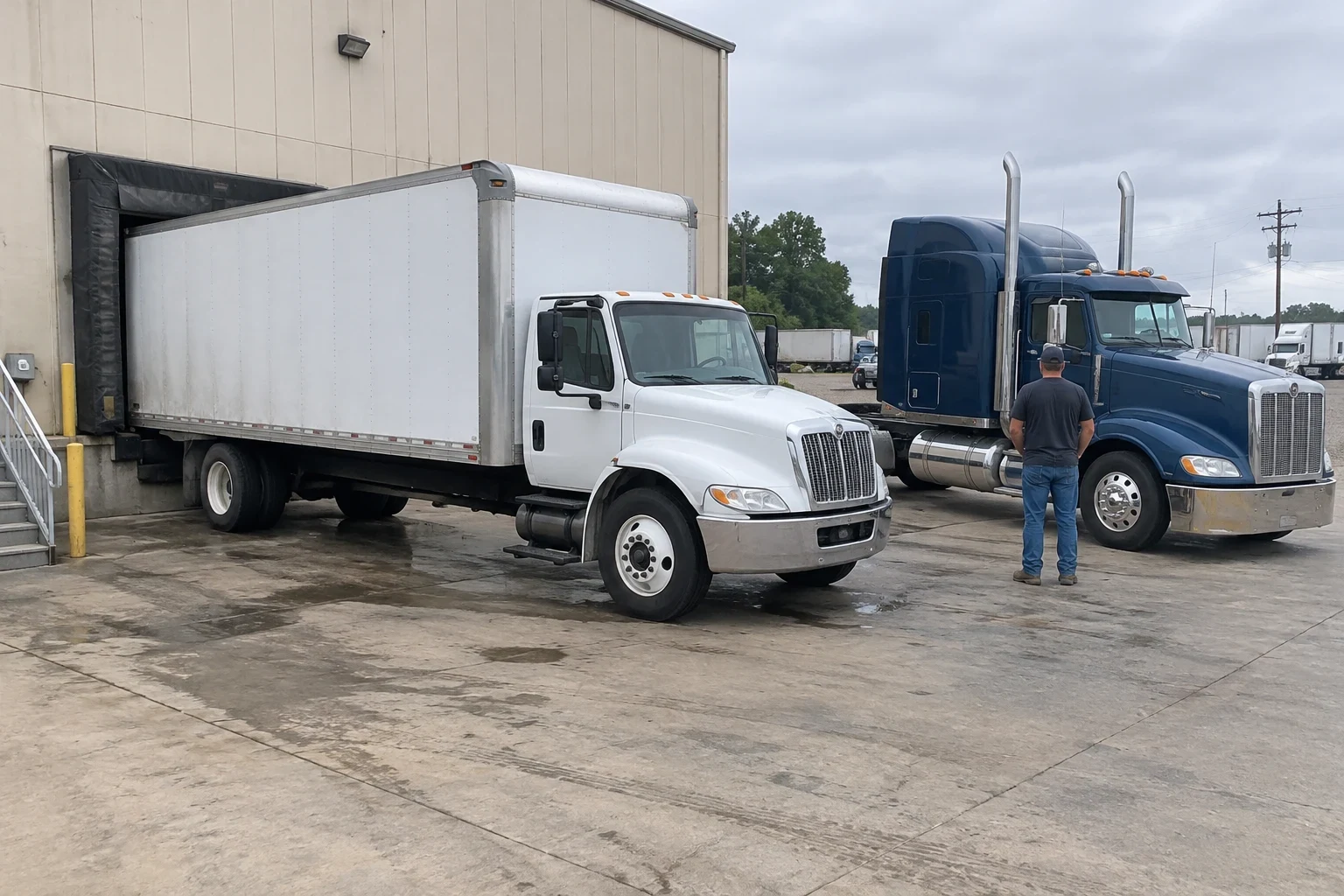
ServicesBox Truck Insurance
Box Truck Insurance in Mesquite
A box truck sits in an odd spot: big enough for federal rules, small enough that many policies are written for the wrong vehicle. We match coverage to your truck's GVWR, the freight in the box and the contracts you plan to sign, so you can quote work with real numbers.
What box truck insurance covers and who needs it
Box truck insurance is a commercial auto program for straight trucks, typically 16 to 26 feet long with a dry van or refrigerated body. Most programs pair liability for harm you cause on the road with collision and comprehensive coverage for the chassis and body, plus cargo coverage for the freight you carry. Which pieces you need depends on whether you haul under your own MC authority, lease onto a carrier or move your own company's goods.
GVWR shapes much of the policy. A truck rated at 26,000 lbs or less doesn't require a CDL, which opens up more drivers but frequently raises the premium, since underwriters expect less experience at the wheel. Once you're over 10,001 lbs and hauling for hire across state lines, you need a USDOT number, operating authority and a liability filing in place.
We prefer to settle these questions before a broker or shipper sends over a carrier packet. If a load board contract or last-mile route is on the horizon, call while there's still time to weigh options.
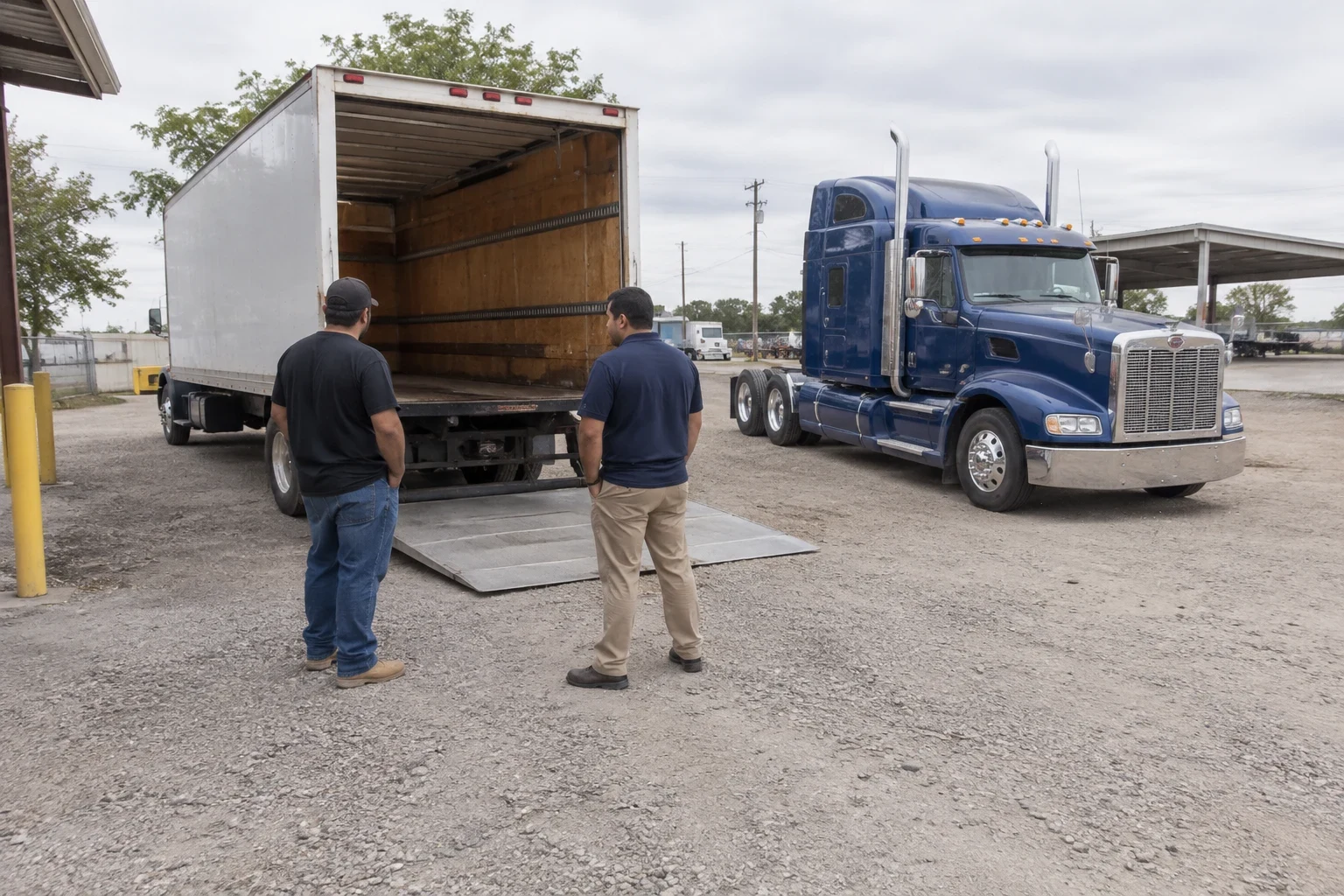
Coverage we build into a box truck program
- 01
Liability and the required filing
This responds when your truck is at fault and someone else is hurt or their vehicle or property is damaged. When you run under your own MC authority, we put the liability filing on record so the authority can activate without a lapse.
- 02
Physical damage for chassis and body
Collision and comprehensive protect the truck, the box and anything bolted to it. We set the stated value to include a liftgate or reefer unit, so a total loss pays out on the truck you actually own.
- 03
Motor truck cargo
Covers freight that is damaged or lost while in your care. We read the exclusions that catch box truck operators off guard, including theft from an unattended truck, electronics and spoilage after a reefer failure.
- 04
Certificates matched to each contract
Brokers, shippers and warehouses each want certificates showing set limits and their own certificate holder wording. We prepare every certificate to fit that contract's insurance terms.
- 05
Gaps for leased-on operators
Driving under someone else's authority usually means their policy only applies while you're dispatched. We review non-trucking liability (bobtail) insurance and physical damage to cover what that policy doesn't.
Questions about Box Truck Insurance?
Call(972) 846-9540Signs your box truck coverage needs a review
Your policy is written as a personal or light commercial auto
Personal policies typically exclude for-hire hauling. If you're delivering freight for pay on that kind of policy, a claim can be denied outright.
A contract asks for limits you don't carry
Many delivery and freight contracts require higher liability or cargo limits than your current policy. Finding that out the week you start costs you the route.
You added a liftgate or reefer
Equipment added after the policy was written often isn't in the stated value. A loss would pay on the bare truck.
You hired a non-CDL driver
Every driver has to be listed and approved. An unlisted driver with a thin record can leave a claim uncovered.
You're moving from leased-on to your own authority
The carrier's coverage ends when you leave. Your own liability filing has to be in place before you haul a single load.
How we put your box truck quote together
- 1
Go over your operation
By phone, on video or at our office, we review the truck's year, GVWR and body style, your radius, your freight and your customers. Keep your DOT number and any contract insurance terms nearby.
- 2
Collect driver and loss history
We gather each driver's motor vehicle record, years of commercial driving and any prior loss runs. Underwriters price on this information, so getting it right up front avoids a re-rate after binding.
- 3
Compare quotes side by side
Each quote is broken out by coverage, limit and deductible so you can see what drives the premium. You choose the deductible and down payment that suit your cash flow.
- 4
Bind, file and deliver certificates
After you give the go-ahead on the phone, we bind the policy, file what your authority requires and get certificates of insurance to each broker or shipper on your list.
Why box truck premiums differ so much
Two operators with nearly identical straight trucks can see very different premiums. Most of the gap traces back to the people driving, the freight inside the body and the miles the truck covers. We point out which factors you can improve before renewal and which ones you simply budget for.
- Who sits behind the wheel
- Moving violations, at-fault crashes and a short commercial driving history all raise the rate. Underwriters often treat non-CDL drivers as less seasoned, even with a clean record.
- Operating radius
- Short-haul local delivery is rated differently from regional or interstate work. Heavy traffic corridors like the interstates around Mesquite produce more stop-and-go fender benders, and underwriters account for that.
- What rides in the box
- Furniture moves, electronics and refrigerated food carry more cargo exposure than general dry freight. Higher cargo limits usually come with them.
- Truck value and add-ons
- Collision and comprehensive are priced on what it would take to replace the truck. A newer chassis fitted with a liftgate and refrigeration carries a bigger physical damage premium than an older truck with a plain dry van body.
- Years under your own authority
- Newer authorities generally pay more early on. A clean loss record by renewal is the strongest bargaining point you'll have.
Common box truck coverage questions
Does my box truck need a USDOT number?
A truck rated above 10,001 lbs GVWR hauling for hire across state lines needs one. Texas has separate registration rules for certain intrastate commercial work as well. We'll sort out which rules apply to your truck and routes before we quote.
Will a non-CDL box truck cost less to insure?
Often it doesn't. Staying at 26,000 lbs GVWR or under removes the CDL requirement, but underwriters may rate higher because those drivers usually have less commercial time. A driver with a clean record and documented years in a truck matters most.
If my reefer unit fails, does cargo coverage pay for spoiled freight?
Only when reefer breakdown coverage is part of the policy. Many standard cargo forms exclude spoilage caused by mechanical failure. For refrigerated loads, we confirm that endorsement is on the policy before you bind.
How quickly can a broker be added as certificate holder?
Certificates go out once coverage is bound, and timing depends on the insurance carrier. Calling while the contract is still being negotiated gives us room to make sure your limits match before the paperwork deadline.
I'm leased onto a carrier. What coverage is still on me?
The carrier's policy typically covers liability only while you're under dispatch. Most leased-on box truck owners still carry bobtail coverage for off-dispatch driving and physical damage on the truck they own.
Line up box truck coverage before the contract lands
Walk us through your truck, who drives it and the loads you expect to haul. We'll explain the coverage, the limits your customers will ask for and what is pushing your premium up or down.