ServicesTrailer Interchange Insurance
Trailer Interchange Insurance in Mesquite, TX
An interchange agreement makes you responsible for someone else's trailer until you hand it back. We read the limit, covered perils and loss-of-use terms with you, then line up coverage that matches before the first pull, so your certificate is accepted the first time.
What trailer interchange covers and when you need it
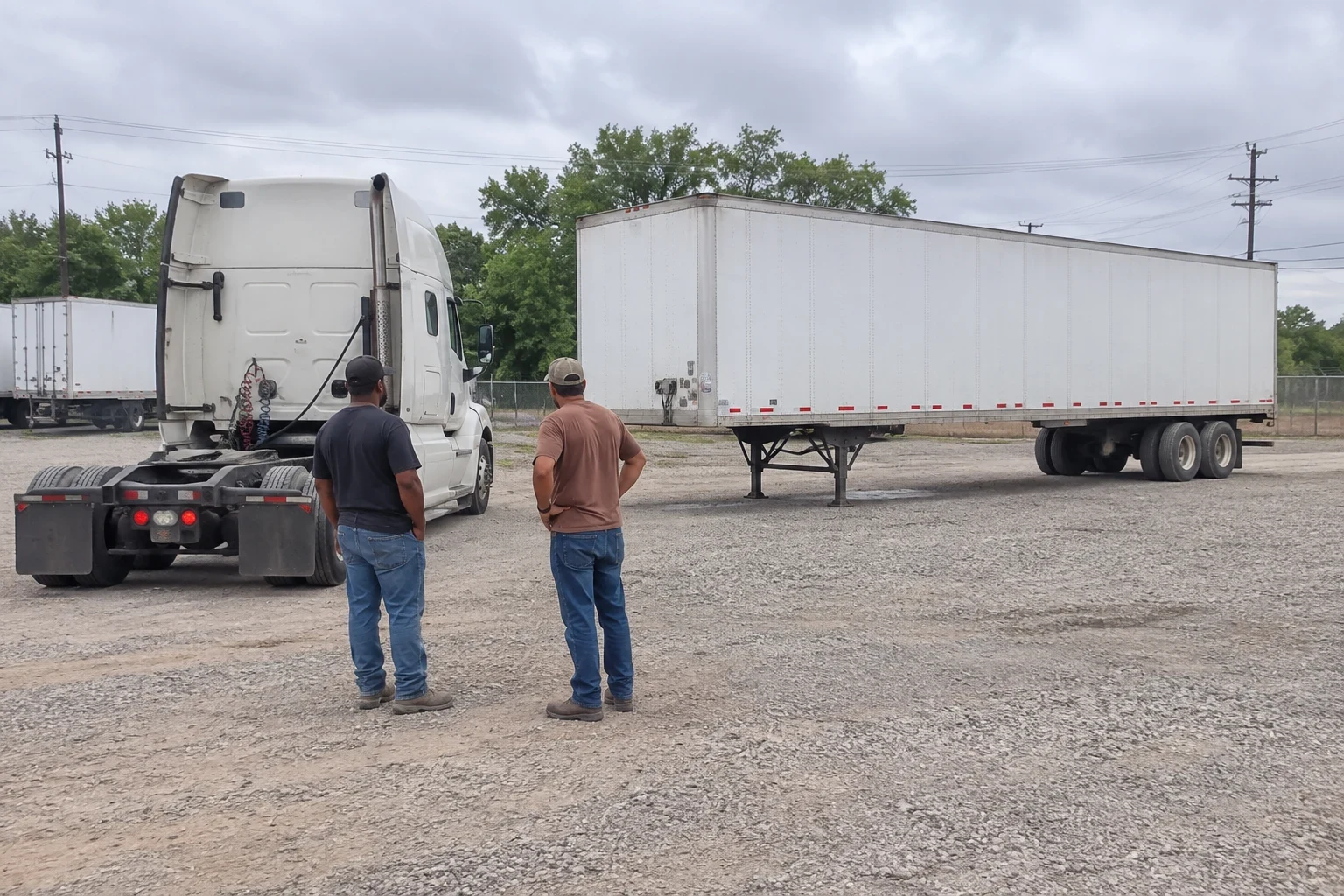
Trailer interchange insurance pays to repair or replace another company's trailer, container or chassis when it is damaged during the stretch your operation has custody of it under an interchange agreement. Signing that agreement moves the risk off the equipment owner and onto you, from the moment the unit is hooked to your tractor until it is dropped back, including any nights it spends in your yard. A collision, fire, theft or vandalism loss in that window gets billed to your company.
Your auto liability pays for damage your rig does to other people and their property. It does not pay to fix the trailer behind you. Your physical damage policy covers equipment you own. Interchange fills the gap between those two, which is why it matters to drayage carriers moving intermodal containers and chassis, power-only operators, and fleets that swap trailers with other motor carriers.
The right time to set it up is the day the agreement lands on your desk. Many equipment providers will not release a trailer until they see a certificate of insurance showing interchange at their required limit, and a week of waiting on paperwork is lost revenue.
What we set up on an interchange policy
- Comprehensive and collision on non-owned units
- Coverage for collision, overturn, fire, theft, vandalism and similar perils to trailers, containers and chassis you hold under the agreement. We check the policy form against the perils your agreement says you are liable for.
- A limit matched to the agreement
- Each agreement states a minimum, and the limit should also reach the most valuable unit you might pull. A reefer trailer with a working refrigeration unit costs far more to replace than a dry van or a bare chassis.
- Loss-of-use charges
- Many agreements bill a daily charge while a damaged trailer sits in the shop. Loss-of-use coverage can be added so those per-day bills are not paid out of your operating account.
- Deductible you can actually cover
- We set the deductible at a figure your cash flow can absorb on a bad week. Some agreements cap the deductible you are allowed to carry, and we read for that clause.
- Certificates for each equipment provider
- We issue certificates of insurance naming the trailer owner or equipment provider as their agreement requires. For intermodal work under the UIIA, providers verify coverage before releasing equipment, so the policy details have to line up with what they look for.
Signs your operation needs interchange coverage
An agreement is waiting for your signature
If a shipper, broker or equipment provider has sent a trailer interchange agreement, it almost always names an insurance requirement. Read that section before you sign.
You pull intermodal containers or chassis
Drayage runs between rail ramps and warehouses put another company's equipment under your control on every load.
You run power-only freight
Pulling a customer's preloaded trailer means the trailer is your responsibility from hook to drop.
You swap trailers with another carrier
Trading trailers to balance lanes is common among small fleets, and a handshake deal still leaves you liable if one is damaged.
A certificate was rejected
When an equipment provider turns down your certificate, it usually means interchange is missing or the limit is too low. That is a fixable problem, but it holds up the load until it is fixed.
What moves the price of interchange coverage
Interchange premium is driven mostly by how much trailer value you are responsible for and how often you hold it. We cannot price it until we see your equipment and the agreement. We can tell you which levers matter, so you can budget for it before the contract starts.
Per-trailer limit
A higher limit for reefers or specialized trailers raises the premium compared to dry vans or bare chassis.
Deductible
A higher deductible lowers the premium, as long as your agreement allows it and you can cover it from cash.
Loss-of-use coverage
Adding it costs more, but it can keep daily downtime charges from stacking up after a claim.
Where trailers sit overnight
Units dropped in open lots carry more theft and vandalism risk than units parked in a fenced, lit yard.
Your history
Time under your own MC authority, prior physical damage claims and driver records all shape what carriers will charge.
How we put interchange coverage in place
- 1
Walk through the agreement
By phone, video or at our office, we go through the interchange agreement line by line. We note the required limit, the perils you are liable for, any loss-of-use terms and any deductible cap.
- 2
List the equipment you will pull
We ask what types of trailers you expect, how often, and roughly what each is worth. This sets the limit and tells us whether you need one agreement covered or several.
- 3
Compare quotes
We shop carriers that write interchange and show you what each form covers and excludes, not only the premium. Some forms exclude certain perils or cap loss-of-use days.
- 4
Bind and issue certificates
Once you choose, we bind the coverage and send certificates to each equipment provider named in your agreements.
- 5
Check again before the next agreement
New customers bring new agreements with different limits. A quick review before you sign keeps you from discovering a shortfall at the gate.
Before you hook another company's trailer
How is interchange different from coverage for trailers I borrow without a contract?
The two names get mixed up often, but they apply in different situations. Interchange coverage responds when a signed interchange contract with the equipment owner is in place. Non-owned trailer physical damage is built for units you rent or borrow with no such contract behind them. Insurers write these as separate coverages, and some operations end up needing both.
Won't my auto liability pay if the trailer behind me gets damaged?
No. Primary auto liability pays for damage your rig does to other people and their property. Repairing or replacing the trailer you are pulling falls to interchange or non-owned trailer coverage instead.
If the load is damaged, does interchange pay for it?
It does not. Interchange is limited to the trailer, container or chassis itself. Freight belongs under motor truck cargo insurance, so we look at both policies together when we go over your operation.
My truck is leased on to a motor carrier. Does their policy protect me?
It can go either way. The answer sits in the wording of your lease and the carrier's policy. We will go through both documents with you and give you a straight answer on whether you should carry interchange of your own.
Is it possible to add interchange partway through my policy term?
In most cases, yes, through an endorsement. Try to reach us a few days ahead of the first load, because the insurer has to sign off on the change before certificates can be issued.
Get interchange coverage set before the next pickup
Have your agreement and equipment list handy when you reach us. We will go over the limit and terms with you and line up quotes that fit.