ServicesNew Authority Truck Insurance
New Authority Truck Insurance in Mesquite
Your MC authority will not go active until proof of liability coverage is on file with FMCSA. We help new motor carriers line up a quote, understand the down payment and get the filing submitted on schedule, so the authority and the first load arrive on time.
What new authority insurance covers and when to start
A new authority policy is the coverage package a motor carrier needs during its first year or two under its own DOT number and MC authority. At minimum that means primary auto liability with a BMC-91X filing sent electronically to FMCSA. Most shippers and brokers also expect motor truck cargo coverage, and anyone financing a truck needs physical damage coverage to satisfy the lender.
Underwriters view a brand-new authority as a new venture. With no loss runs under your company name, they rate on what they can check: how long you have held a CDL, the violations and accidents on your driving record, the equipment, the commodities and the miles you plan to cover. That is why the first-year premium usually runs higher than it will at renewal, and why the down payment catches many new carriers off guard.
The best time to call is before you apply for authority, or right after. FMCSA gives applicants a limited window to get insurance on file, and the application can be dismissed if the filing never arrives. Starting early lets you budget the down payment instead of scrambling for it.
Coverage and filings a first-year carrier needs
- Liability coverage with a BMC-91X filing
- We quote liability at the limit your freight calls for, and the insurer sends the BMC-91X electronically to FMCSA. That filing is what moves your authority from pending to active. Our Primary Auto Liability Insurance page explains how limits work.
- Texas intrastate filings
- If you plan to haul loads that start and end inside Texas, TxDMV requires a Form E filing as proof of liability coverage. We make sure it lines up with your intrastate registration so both are in place together.
- Cargo coverage that matches broker requirements
- Brokers set their own minimum cargo limits and often exclude certain commodities. We compare the policy wording against what you plan to haul, so a claim on electronics or refrigerated freight is not denied over an exclusion you never saw.
- Physical damage for financed equipment
- Lenders and lease companies require collision and comprehensive coverage with them listed as loss payee. We set the stated value carefully, because covering a truck for less than its worth cuts the claim payout.
- Certificates of insurance for your first loads
- Every broker setup packet asks for a certificate of insurance naming them as certificate holder. We explain how to get one issued quickly so a missing certificate never holds up a load you already booked.
Signs it is time to call about new authority coverage
Your MC application shows pending insurance
FMCSA lists your authority as pending until a BMC-91X is received. If the protest period is running out and no filing is on record, the clock is working against you.
You are leaving a lease with another carrier
Running under someone else's authority means their liability policy covered you. Once you move to your own DOT number, that coverage ends the day you leave, and your own policy has to start that same day.
A broker rejected your setup packet
Rejections often come down to a cargo limit that is too low, a missing reefer breakdown endorsement or a certificate that lists the wrong name. Each of those can be fixed with the right policy wording.
You are buying or financing your first truck
The lender will want proof of physical damage coverage before funding. Getting a quote on the specific VIN early tells you what the monthly cost of owning that truck really is.
What moves the price of new authority coverage
Your premium is built from risk factors the underwriter can measure. With no company history, personal driving experience and equipment carry more weight than they will later. We break each quote down line by line so you can see which coverage costs what before you commit.
CDL experience and driving record
Many insurers want at least two years of verifiable commercial driving. Moving violations, accidents and gaps in experience all raise the rate or limit which markets will quote.
What you haul
General dry freight rates lower than hazmat, auto hauling or high-theft commodities. The commodity list also drives the cargo premium and the exclusions on that policy.
Radius and garaging location
Long-haul operations crossing many states usually pay more than local or regional work. Where the truck is parked overnight also factors into the rate.
Equipment value and type
A newer tractor with a high stated value costs more to insure for physical damage. Trailer type matters too, since a reefer adds breakdown exposure to cargo coverage.
Payment structure
New ventures often face a larger down payment. Premium financing spreads the remainder into monthly installments, and we explain those terms before you sign.
From first conversation to an active authority
- 1
Start with your driving history and equipment
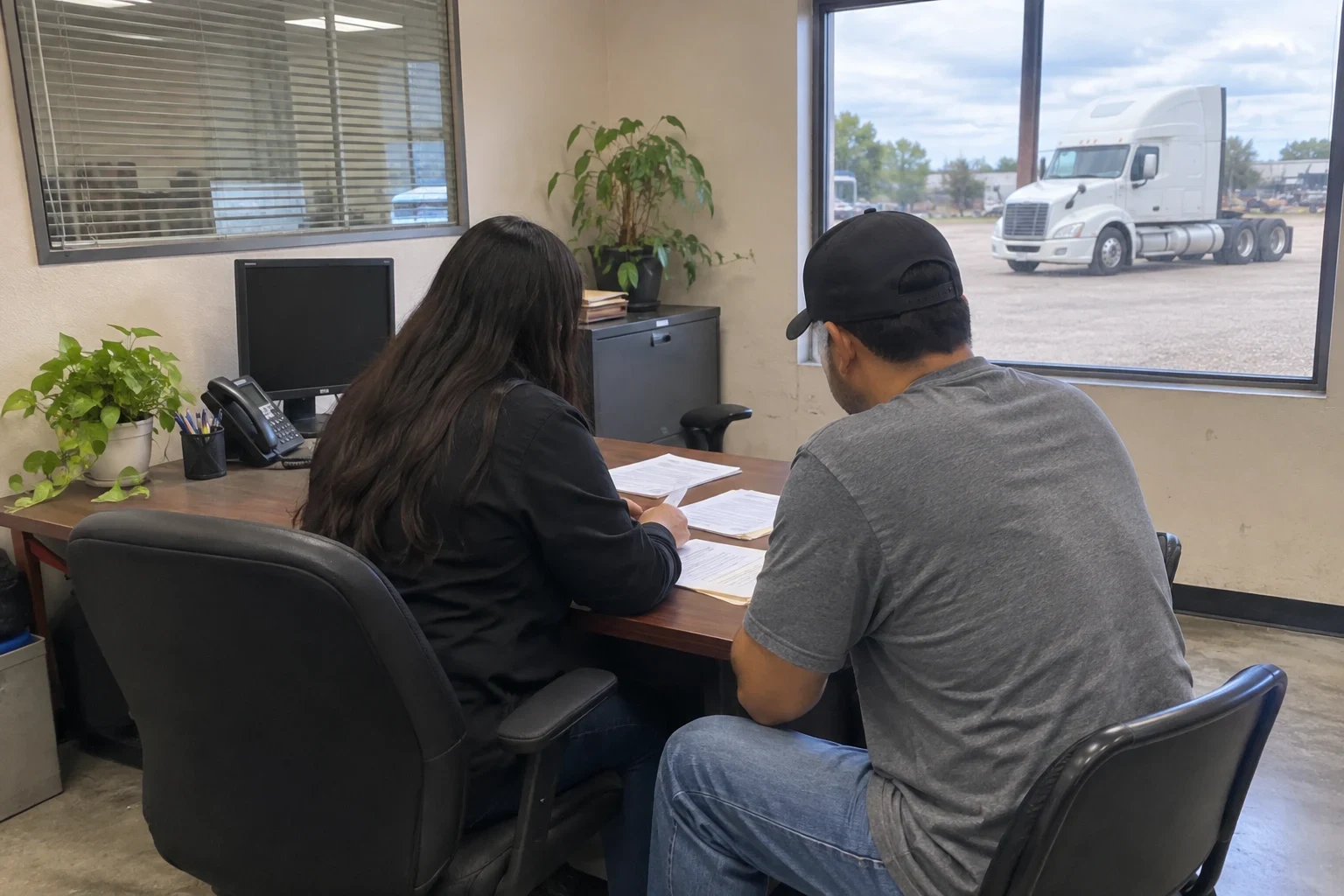
The first conversation can happen at our office or over a phone or video call. You tell us how long you have driven commercially, which tractor and trailer you run, the commodities you expect to haul and how far you plan to travel. Mention past claims and tickets up front, because the underwriter pulls your MVR and will find them regardless.
- 2
Quote with insurers that accept new ventures
Plenty of insurers decline carriers with no loss history, so we go to the ones that write them. Each quote comes back next to the others, showing limits, deductibles, exclusions and the down payment.
- 3
Bind coverage and confirm the FMCSA filing
Once you choose a quote and make the down payment, the insurer puts the policy in force and sends the BMC-91X to FMCSA electronically, plus a Form E for Texas intrastate hauling. We then look up your FMCSA record to confirm the filing posted.
- 4
Get ready for the new entrant audit
Every new entrant gets a safety audit inside the first twelve months. We talk through how clean roadside inspections and organized maintenance records support a better renewal, giving you time to prepare well before the audit date.
Common questions from first-year carriers
Should I wait until my MC number arrives before shopping for coverage?
No, shopping early works in your favor. When you apply for authority, FMCSA assigns an MC number in pending status, and the insurer can transmit the BMC-91X against that number. The authority turns active once the filing is accepted and the protest period has closed.
Why does my first-year quote look higher than what established carriers pay?
An underwriter has no loss history for your company to rate, so the new venture is priced more cautiously. Carriers with several clean years under their own DOT number give the insurer a track record to work from. A year of clean inspections and no claims is the most direct path to a lower renewal premium.
Is the BOC-3 part of my insurance policy?
It is not. The BOC-3 designates a process agent in each state where you operate, and a process agent company normally files it for you. FMCSA has to see it on record before the authority activates, so we remind new carriers to handle it alongside the insurance filing.
Is cargo coverage worth buying when FMCSA does not require it?
For most general freight, FMCSA does not mandate cargo coverage. Brokers and shippers nearly always do, and without it you will have a hard time booking loads. The Motor Truck Cargo Insurance page covers limits and the exclusions that catch carriers by surprise.
What happens to my authority if the policy cancels?
The insurer sends a cancellation notice to FMCSA, and the authority can be revoked unless replacement coverage is filed before the cancellation takes effect. Missed installments cause most of these cancellations, so we help you choose a payment schedule that fits your cash flow from the start.
Line up your coverage before the authority deadline
Tell us your timeline, your truck and what you plan to haul. We will walk through quotes, the down payment and the filings so your first load is not waiting on paperwork.